


The World Needs Plumbers. And Plumbers Need a Plan.
There is a widely shared frustration among those who work on the long-term challenges facing our societies – whether in science, economics, ecology, or business. They often know, years or even decades ahead of time, which transformations will define our future prosperity or threaten it. And yet, as a society, we consistently fail to act on that knowledge until crisis forces our hand.
Biodiversity loss is a case in point. Scientists have been sounding the alarm for decades. The economic case for nature – as the foundation of all human activity, and as a risk factor for every business operating on this planet – has been rigorously documented. The frameworks exist. The solutions are known. And yet the gap between what we know and what we do remains stubbornly wide.
So how do we close it? An article by Peter Vanham, for InTent.
Anticipatory leadership as a starting point
One answer, championed by some of the world’s most forward-thinking governments – Singapore, Finland, Switzerland – is to build anticipatory leadership into the structures of power itself. These countries have invested in various forms of long-horizon planning, scenario thinking, and institutional foresight. The results speak for themselves: they are among the most prepared, most resilient, and most prosperous societies on the planet.
But what works in a small, high-trust, institutionally stable society is difficult to replicate at scale – and near impossible to mandate in larger, more fractured political environments. Most governments are structurally oriented towards the short term: electoral cycles, immediate crises, and competing constituencies all conspire against the kind of long-horizon thinking that transformative challenges require.
This is the uncomfortable reality that anyone working on systemic change – in nature, in business, in education – must reckon with. It is not enough to have the right answers. The question is how to act effectively within an imperfect world.
Enter the plumber
The French philosopher Fanny Lederlin has written compellingly about two contrasting figures of leadership: the engineer and the bricoleur – or, to put it more plainly, “the plumber” (a figure made popular in the 1990’s by European politician Jean-Luc Dehaene, who was nicknamed “the plumber” in his time as Belgian Prime Minister). The engineer designs ideal solutions from first principles, working backwards from a vision of how things should be. The plumber starts from where things actually are: broken, messy, and urgently in need of attention.
The plumber’s approach can sound like a retreat from ambition. And in isolation, it often is. Crisis management that never becomes structural reform simply sets the stage for the next, worse crisis. But the plumber’s approach has one powerful virtue that the engineer’s lacks: it works within the world as it is, and it can open doors that pure idealism cannot.
History bears this out. The Allied landing in Normandy in 1944 – messy, costly, and improvised under terrible conditions – was perhaps the ultimate act of bricolage. Yet it created the conditions for the most consequential period of institutional architecture in modern history: the Bretton Woods system, the United Nations, the foundations of the European Union. The immediate crisis, addressed with pragmatism and courage, became the opening for structural change.
More recently, the COVID-19 pandemic demonstrated both the promise and the peril of this dynamic. Governments scrambled to respond to an immediate emergency – and the scientific community, to its great credit, rose to meet the moment. But the broader opportunity to build more resilient systems for the future was largely missed. The window opened; the moment passed.
The missing ingredient: bridging now and next
Leading with anticipatory methods is a powerful approach, if it learns to operate inside, not apart from, the messy reality of the present. Experts – scientists, economists, ecologists, business leaders – who understand what is coming 10 or 25 years from now cannot afford to wait in the wings for the perfect moment to act. They must be embedded in the daily work of addressing today’s problems, ready to expand the frame when the moment allows.
Among economists, this realization is taking root. Esther Duflo, the French-American economist who won a (joint) Nobel Prize for her work on alleviating global poverty, in a 2017 paper called on her peers to “adopt the mindset of a plumber”. As she put it: “economists should seriously engage with plumbing, in the interest of both society and our discipline”, because “plumbers try to predict as well as possible what may work in the real world, mindful that tinkering and adjusting will be necessary.”
It is, in essence, also what InTent was built to do. It was founded on the conviction that the distance between those who understand the long-term challenges – biodiversity loss, the collapse of natural capital, the failure of our current economic accounting systems – and those with the immediate power to act on them is not inevitable. It can be bridged. But bridging it requires a different kind of engagement: less presenting of ideal solutions, more rolling up sleeves alongside those navigating the chaos of the present.
The Kunming-Montreal Global Biodiversity Framework, adopted in 2022, offers a telling example. For the first time, governments agreed on an ambitious global target: to halt and reverse biodiversity loss by 2030, and to live in harmony with nature by 2050. The science was clear. The frameworks were ready. But translating this into business action – into the daily decisions of CFOs, procurement officers, and investors – requires exactly the kind of translation work that sits at the intersection of the engineer’s vision and the plumber’s pragmatism.
Capitalism has failed because of its focus on short-term profitability and performance. Companies need to be measured not just on their finances, but on how they use their resources to serve their community.
Leaders, what this calls for
The plumbing approach to leadership is a call for realism in service of ambition. It asks three things of those who understand what is coming.
First, get close to the crisis. The experts and business leaders who understand the long-term stakes of biodiversity loss, climate disruption, and social inequality cannot remain in the world of workshops and white papers. They must be present in the rooms where urgent decisions are made, ready to offer the structural perspective when the moment is right.
Second, prepare the narrative. Crises create windows, but it still takes a good narrative to pass through the window of opportunity.. The case for integrating natural, human, and social capital into business decision-making is compelling, but it must be told in language that lands in boardrooms, finance ministries, and newsrooms, not only in academic journals and NGO reports.
Third, build the bridges now. The distance between a conservation scientist and a CFO, between a policymaker and an activist, between a business school professor and a startup founder, is not insurmountable. But it requires deliberate effort to close. Cross-sector collaboration — the kind that brings people into genuine dialogue before the crisis, not only during it — is the infrastructure of anticipatory action.
The opportunity in the chaos
The world is, at this moment, generating crises faster than it is generating responses. From geopolitical brinkmanship to the accelerating loss of biodiversity, from the fracturing of multilateral institutions to the deepening of social inequality, it can feel as though the narrow plumbing approach – i.e. the one without the anticipatory leadership – is all we have left.
But chaotic moments are also, historically, when structural change becomes possible. The question is whether those who understand what better systems look like will be close enough to the action to shape what comes next – or whether they will be watching from a distance, waiting for the world to become ready for their ideas.
At InTent, we believe the answer lies in learning to be, at once, both engineer and plumber: holding the long-term vision with conviction, while working with honesty and humility in the reality of the present. Not despite the messiness of today’s world, but because of it.
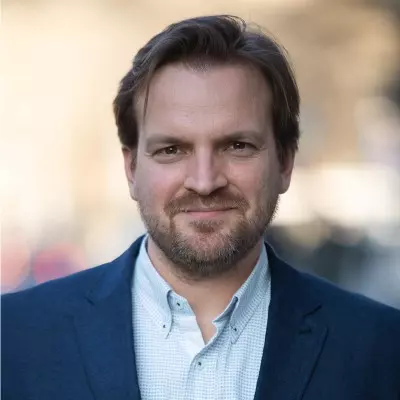
This piece was written by Peter Vanham, co-author of The New Nature of Business and Editor in Chief of The Cercle. It was commissioned and edited by InTent. The writer wishes to thank Hortense Lauras and Katell Le Goulven for their contributions.
Author
Business journalist, author, and researcher, Peter Vanham writes about the global economy and the people who shape it, as well as concepts such as stakeholder capitalism and sustainability. As an author, his books include The New Nature of Business (with Andre Hoffmann, 2024). As a journalist, Peter works as Editorial Director at Fortune, and is one of the main contributors to Fortune’s CEO Daily flagship newsletter.
Stay updated
Register to InTent newsletter to stay informed on our programmes, events and latest news