

2026 perspectives: reflecting on 6 years of InTent
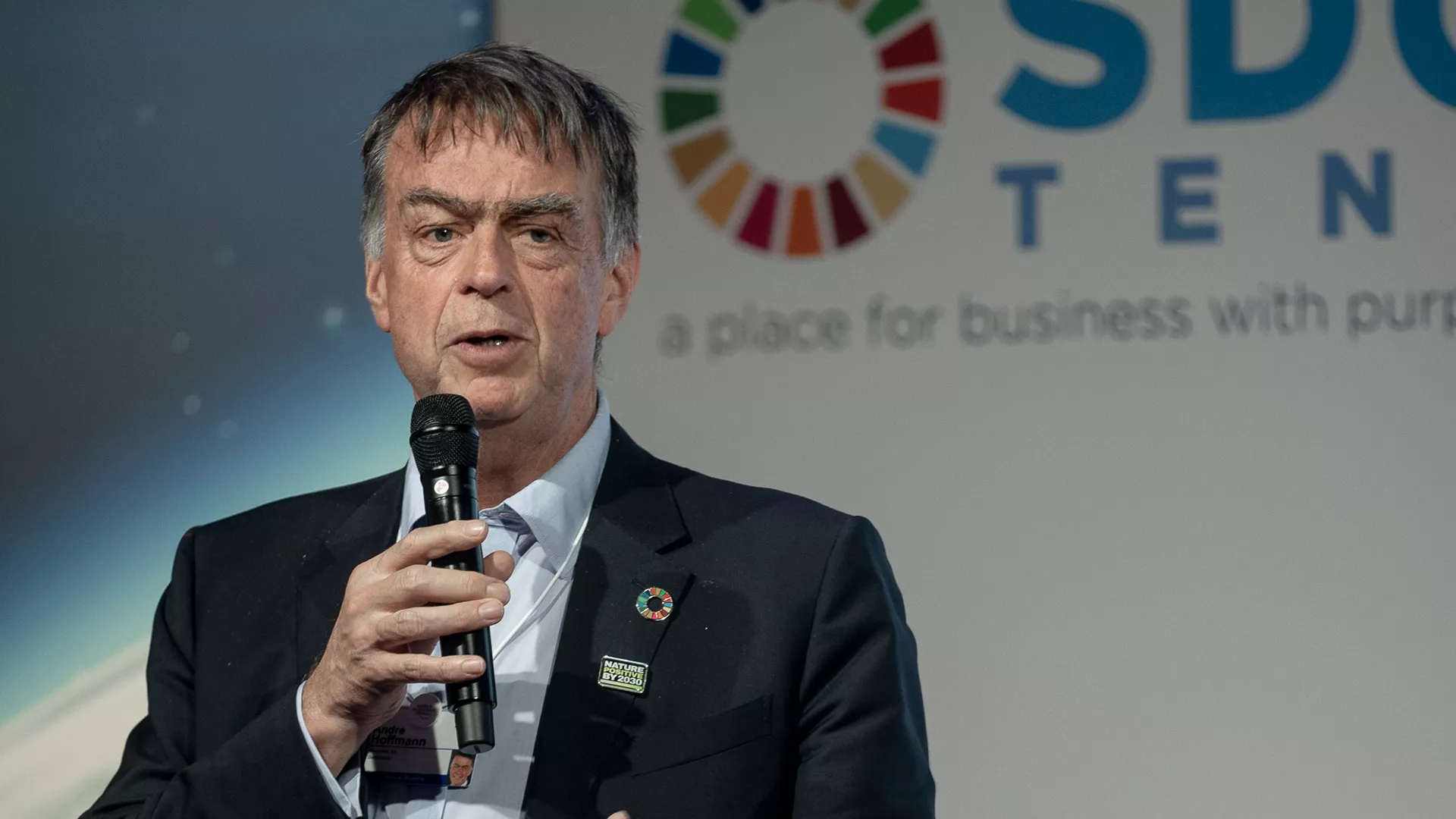
In 2019, we first gather “in a tent” at Davos to make nature and inclusion part of the agenda of global business and political leaders. This year, “InTent” gathers once again with the same purpose, but more solid foundations – both literally and figuratively. Our meetings now are part of a process and structure, set up for systemic change. We still converse, but now also follow up with actions and plans. And we gather in Hotel National, the new home of InTent at Davos. Here are the lessons learned along the way by InTent’s co-founder André Hoffmann.

“I remember being in Davos in 2018, not the snow and the schedules, but the sense that important conversations – about the economy, society, nature, and climate – were happening just out of earshot of the people and ecosystems most affected. The following year, my wife Rosalie and I started InTent.
The idea was simple enough to fit on a napkin: “in a tent”, right next to the World Economic Forum, invite people of our network – corporate representatives but also, and much more prominently, academia, NGO’s, civil society, government representatives and more – to voluntarily converse about nature and inclusion. Put unusual allies around a table. Listen. See what might happen.
Looking back, six years later, that first intention still feels spot-on, but also a bit naive. In 2019, environmental, social, and governance (ESG) considerations were only beginning to find their language.
Young people, like Greta Thunberg and like-minded school students, were in the streets, asking adults to match words with climate action. COVID-19 had not yet revealed how tightly our health, economies, and ecosystems are bound together. And nature – our shared life-support system – was still largely a side panel at the economic agenda. We believed that convening diverse voices would be enough to spark change. The hard truth was: it wasn’t.
People did show up, generously. But the conditions for systemic collaboration weren’t there. We lacked the measurement tools to compare and share progress across sectors. We had no shared governance to translate dialogue into decisions. Regulation was either missing, misaligned, or siloed—nudging good actors while allowing the system to reward the status quo.
We underestimated how hard it is to move from insights to incentives, from pilots to policy, from enthusiasm to execution. Good intentions and rich dialogue created momentum, but not durable impact. In the meantime, biodiversity and ecosystems kept degrading, health, climate and nature catastrophes accelerated (think Covid, devastating Amazon wildfires, and ocean acidification, to name only a few) and democracies were taking a hit in an ever accelerating context of disinformation, misinformation, and mistrust.
And so, we did not stop. We adjusted. We moved from convening to constructing. InTent shifted from hosting conversations to building the scaffolding that collaboration requires.
We headed to the 2022 United Nations Biodiversity Conference (COP15) as a coalition of private actors, for example, pushing for global governance mechanisms that clarify roles, align incentives, and make decisions traceable. (The coalition, which included InTent partners such as Business for Nature and the Capitals Coalition, successfully urged world leaders to “Make it Mandatory” for companies to assess and reveal their impact on nature by 2030.)
And, we rethought partnerships and challenged leadership: not just who is at the table, but how power and accountability are shared; not just inclusion as a theme, but inclusion as a practice embedded in how agendas are set, resources are allocated, and outcomes are reviewed.
This has not been a straight line. We tested, learned, and retired ideas that did not scale. We made peace with iteration: better to ship with an imperfect tool and an incomplete team than to admire a perfect concept that never leaves the slide deck.
After six years, a few lessons feel durable:
-
Dialogue is a starting point; structures sustain impact. Convenings can open minds, but only operating models—metrics, mandates, and mechanisms—change results.
-
Collaboration demands humility, patience, and persistence. Humility to share credit and cede control; patience to move at the speed of trust; persistence to keep going when attention shifts.
-
Inclusion is not a session title. It is a leadership decision: who decides, who benefits, who is heard, and who is accountable when promises aren’t kept.
And finally, and perhaps most importantly: nature cannot be a side conversation, or a “nice to have” as part of the corporate social responsibility program. It must be central to economic and business decision-making, not (only) because it is morally pleasing, but because it is materially determinative of value, risk, and resilience.
These lessons continue to shape our work. We are focusing on fewer fields of action (make nature count, value all forms of capital, foster bold leadership) and deeper coalitions where we can help design the rules of collaboration, not just support the agenda of a meeting. We are building capacity with partners so that systemic action and inclusion show up in leadership, not only in language. And we are insisting that nature sits at the core of business strategies, finance, and policy—because our survival at worst and long-term prosperity at best depends on it.
This seventh edition of InTent at Davos is not a celebration. (Or, perhaps better said, it’s not only a celebration.) It is a ledger of progress and gaps, an honest account of where and how we must adapt and double our efforts down. We are gathering once more with a clear intention: to prepare the ground for shared agendas and collective action.
One clear “intent” is to create bridges across intertwined issues ahead of three major United Nations “Conference of the Parties” meetings (COP) scheduled for next year: the two biannual ones on biodiversity and desertification, in Armenia and Mongolia (COP17), respectively, and the annual one on climate, in Turkey (COP31).
I am inviting you to join InTent in Davos this year with – on my side – humility for what we misjudged, gratitude for what we have learned together, and above all, renewed determination for the next chapter. The work ahead is larger than any organization and more urgent than any news cycle.
If our first six years taught us anything, it is this: when we match courageous leadership with credible structures, change becomes possible. Now we must make it inevitable.”
André Hoffmann – Co-Founder of InTent
Stay updated
Register to InTent newsletter to stay informed on our programmes, events and latest news